
Description
Patanjali IAS Philosophy Optional — Comprehensive Notes for UPSC Mains
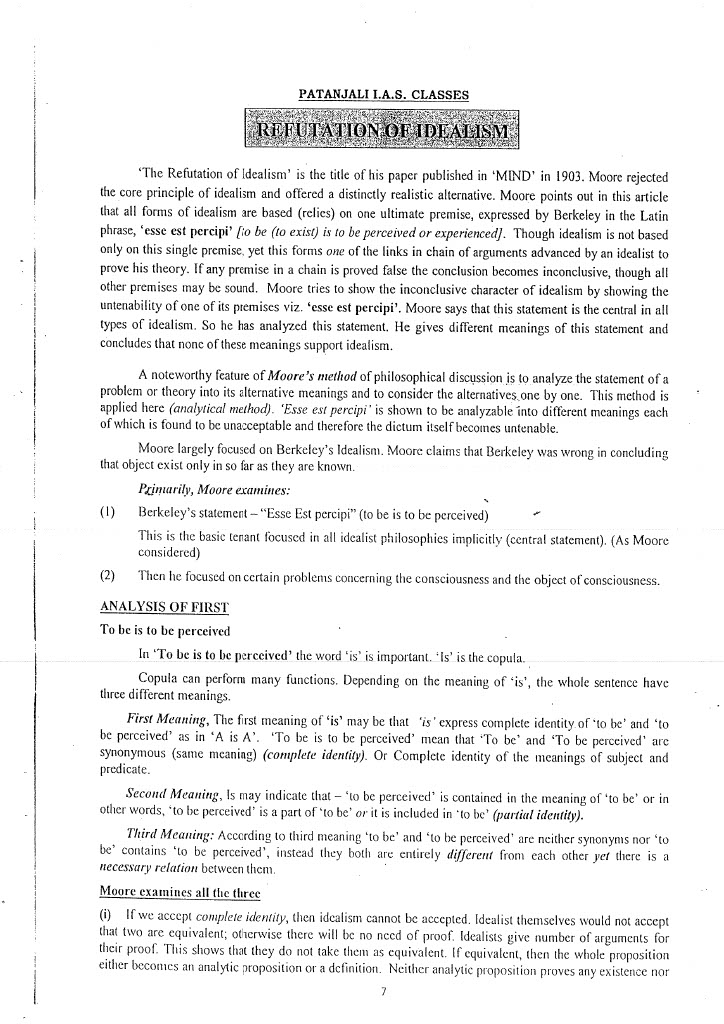
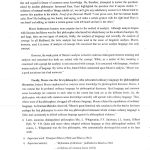
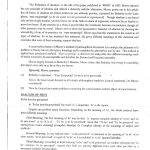
Philosophy Optional is one of UPSC’s most rewarding choices for humanities graduates and aspirants drawn to analytical thinking. Patanjali IAS Philosophy printed notes provide a structured, syllabus-complete resource that has helped aspirants crack both the conceptual understanding and the answer-writing dimension of this optional.
What’s Inside — Paper I: History & Problems of Philosophy
- Plato — Theory of Forms, Epistemology, the Republic
- Aristotle — Logic, Metaphysics, Ethics, Politics
- Descartes — Methodological doubt, Cogito, Mind-Body problem
- Spinoza & Leibniz — Rationalist metaphysics
- Locke, Berkeley, Hume — British Empiricism
- Kant — Critique of Pure Reason, synthetic a priori, Categorical Imperative
- Hegel — Dialectics, Absolute Idealism
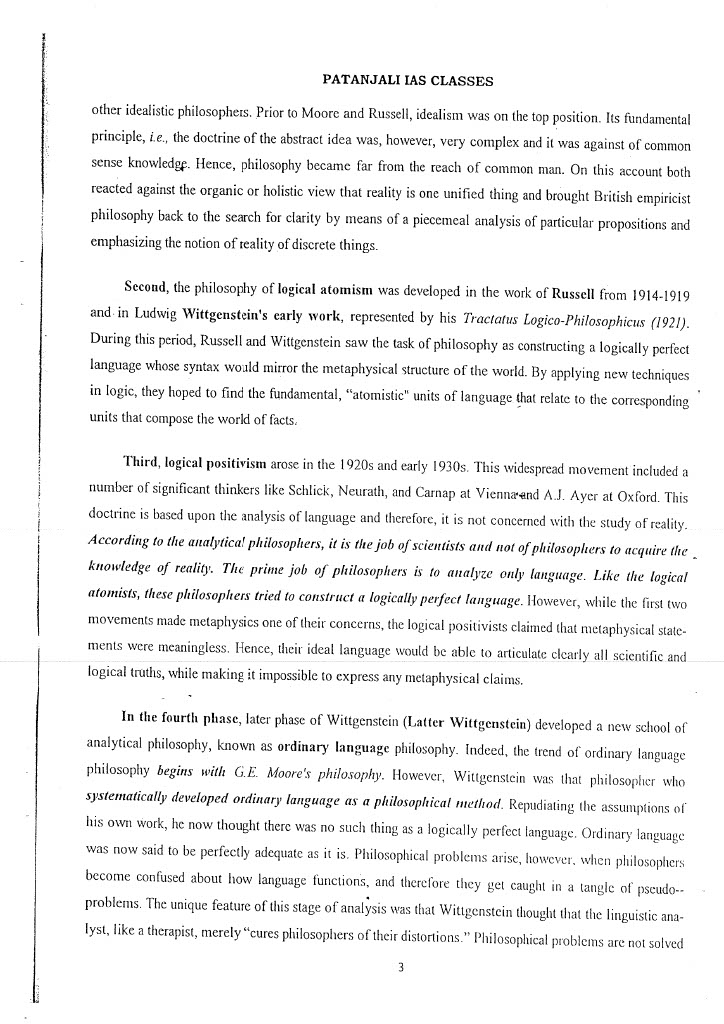
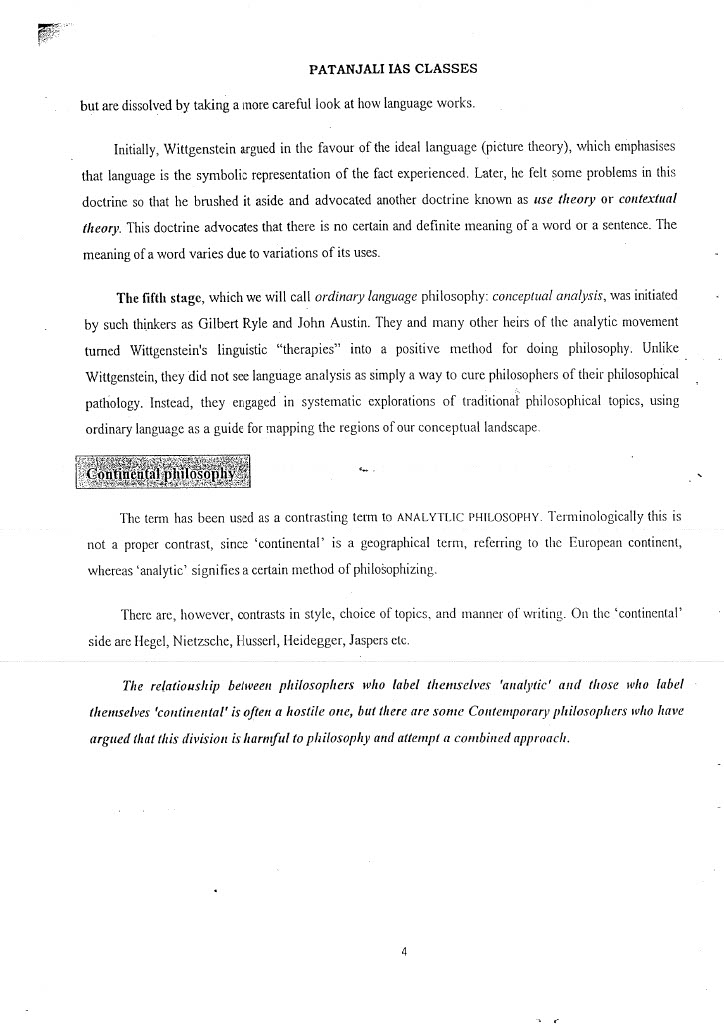
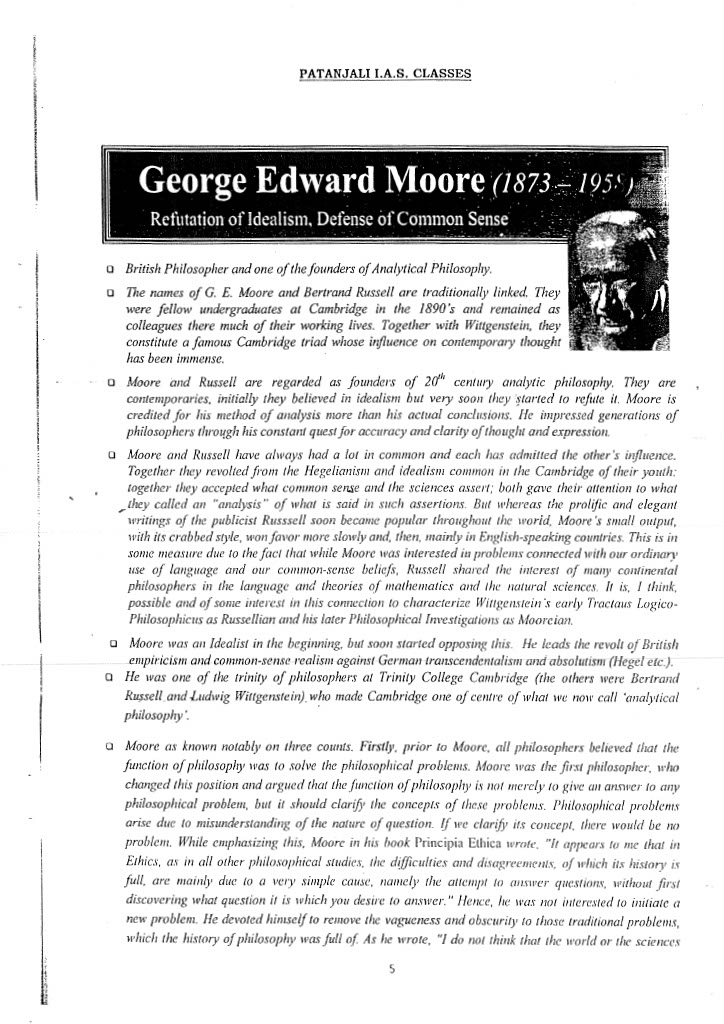
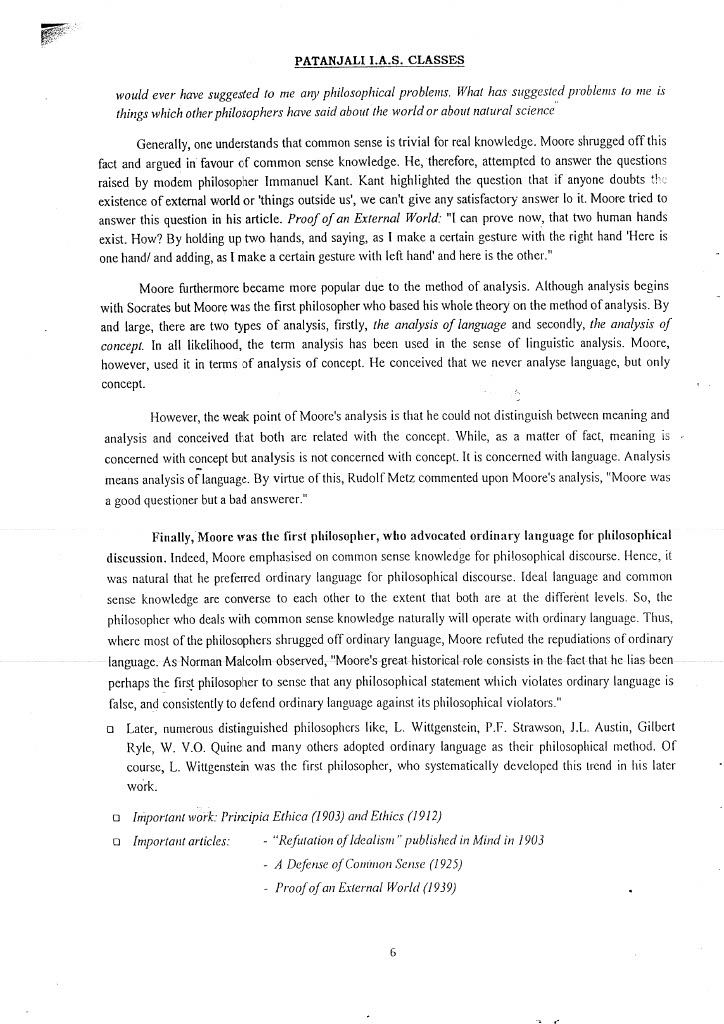
- Moore, Russell, Early Wittgenstein — Analytic philosophy
- Theory of Meaning, Philosophy of Language
What’s Inside — Paper II: Indian Philosophy & Ethics
- Vedic & Upanishadic thought — Brahman, Atman, Maya, Moksha
- Jainism & Buddhism — Anekantavada, Shunyavada, Pratityasamutpada
- Nyaya-Vaisheshika — Theory of knowledge, categories
- Samkhya-Yoga — Purusha, Prakriti, liberation
- Advaita Vedanta — Shankaracharya, Ramanuja, Madhva
- Gandhi, Aurobindo, Vivekananda — Modern Indian thought
- Applied Ethics — Environmental ethics, medical ethics, political philosophy
Why Philosophy Optional Works in UPSC
Philosophy Optional has a high marks-ceiling for aspirants who invest in quality preparation. It also reinforces GS Paper 4 (Ethics) directly — every hour on Philosophy optional strengthens the Ethics paper. Patanjali IAS notes are written with both dimensions in mind.
About Patanjali IAS
Patanjali IAS is a Delhi-based coaching institute dedicated to UPSC preparation, known particularly for humanities optional subjects including Philosophy, History, and Sociology. Faculty members combine philosophical depth with UPSC examiner-oriented teaching.
Format & Delivery
- Typed printed notes — high-resolution PDF
- Paper I (Western & Analytic) and Paper II (Indian Philosophy & Ethics) fully covered
- Comparative tables, philosophical schools overview, and model answer structures
- Instant download after payment
Who Should Buy This
- Philosophy graduates or postgraduates choosing this as UPSC optional
- Humanities aspirants (History, Sociology, Political Science) looking for a complementary optional
- Aspirants wanting to strengthen GS Paper 4 (Ethics) alongside optional preparation
Frequently Asked Questions
- Is Philosophy optional good for non-philosophy graduates?
- Yes — many UPSC toppers chose Philosophy without an academic background. It rewards clear thinking and structured writing more than memorisation.
- Does Philosophy optional help in GS Paper 4 (Ethics)?
- Significantly — GS Paper 4 topics (Ethics theories, Political philosophy, Applied ethics) overlap directly with Philosophy optional Paper II, giving dual benefit.
- What is the marks potential in Philosophy Optional?
- Top scorers achieve 280-310 marks in Philosophy optional (500 total). With quality preparation and good answer writing, 260+ is achievable.
- Are both Western and Indian philosophy covered?
- Yes — Paper I covers Western philosophy (Plato to contemporary analytic philosophy) and Paper II covers Indian philosophical schools plus modern Indian thinkers and applied ethics.
Reviews
There are no reviews yet.