
Description
Overview — UPPCS GS Complete Notes by Plutus IAS
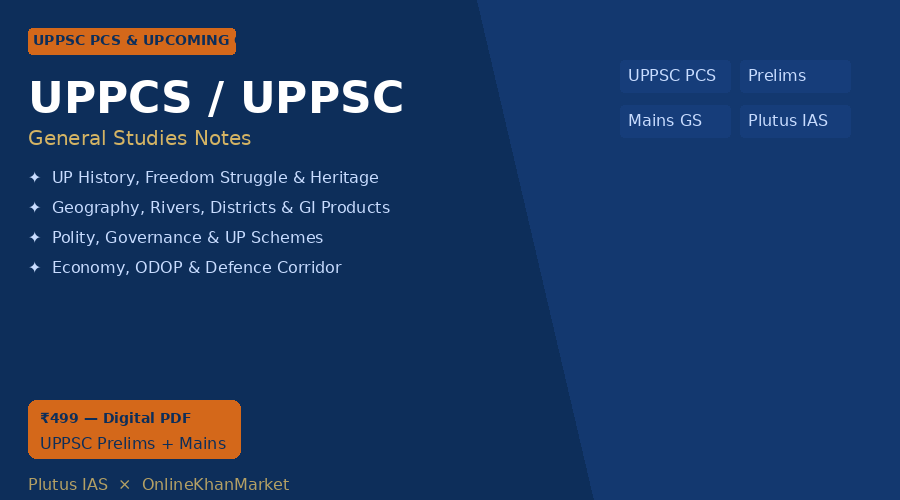
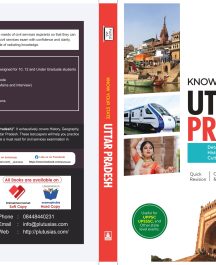
The UPPSC PCS examination is India’s most competitive state PSC exam — 80 Lok Sabha seats and 403 Vidhan Sabha seats make Uttar Pradesh the political heartland of India, and the UPPSC examination reflects that importance. These notes cover the complete UP-specific General Studies syllabus for UPPSC PCS Prelims and Mains: history from Vedic period to Ram Mandir 2024, geography and rivers, polity including UP’s bicameral legislature, the ODOP scheme for all 75 districts, art and culture (Kathak, Banarasi Silk, Chikankari), and the full UPPSC exam structure. Prepared by Plutus IAS faculty and mapped to the current UPPSC syllabus.
What’s Inside — 6 Comprehensive Chapters
- Chapter 1 — UP Historical Background: Vedic and Epic period geography (Hastinapur, Ayodhya, Mathura), 16 Mahajanapadas in UP, Buddhist heritage (Sarnath, Kushinagar, Shravasti, Kapilavastu), Mughal period (Taj Mahal, Fatehpur Sikri, Nawabs of Awadh), UP in the freedom struggle (1857 revolt — Meerut, Lucknow, Jhansi; Chauri Chaura 1922; Lucknow Pact 1916; key freedom fighters — Nehru, Chandrashekhar Azad, Govind Ballabh Pant). 11-entry historical timeline table.
- Chapter 2 — UP Geography: Physical divisions (Terai, Ganga-Yamuna Doab, Bundelkhand Plateau, Vindhyan Hills), 8-river table with sources, UP districts and tributaries, 75 districts and 18 divisions, agriculture and key crops (sugarcane — 50% of India’s total, mentha — 80% global share), ODOP scheme details with 15+ major district products. GI-tagged products: Banarasi Silk, Agra Petha, Lucknow Chikankari, Moradabad Brass, Aligarh Lock, Firozabad Glass Bangles, Bhadohi Carpet, Kannauj Perfume.
- Chapter 3 — UP Polity & Governance: UP Vidhan Sabha (403 seats — India’s largest), UP Vidhan Parishad (100 seats), 80 Lok Sabha seats, Allahabad High Court, Panchayati Raj three-tier system, 10-scheme table (ODOP, Kanya Sumangala Yojana, Mission Shakti, Defence Industrial Corridor, UP EV Policy).
- Chapter 4 — UP Economy: GSDP (₹24–25 lakh crore), per capita income, agriculture share, 12-city industrial cluster table (Kanpur leather, Noida IT, Meerut sports, Moradabad brass, Varanasi silk, Bhadohi carpet, Aligarh locks), Defence Industrial Corridor (6 nodes — Agra, Aligarh, Lucknow, Kanpur, Jhansi, Chitrakoot), UP expressway network (5 expressways — Yamuna, Lucknow-Agra, Purvanchal, Bundelkhand, Ganga).
- Chapter 5 — Art, Culture & Literature: 10-site heritage table (Taj Mahal, Agra Fort, Fatehpur Sikri, Ram Mandir Ayodhya, Ramleela Ramnagar UNESCO, Varanasi Ghats), folk arts (Kathak — Lucknow gharana, Birju Maharaj), Chikankari, Banarasi Silk weaving, Rasiya folk music, Nautanki, 10-author literary table (Tulsidas, Kabir, Surdas, Premchand, Mahadevi Verma, Harivansh Rai Bachchan).
- Chapter 6 — UPPSC Exam Structure: Complete PCS structure (Prelims 200 + CSAT, Mains 10 papers + Interview), 10-topic high-value table (Ayodhya, ODOP, Defence Corridor, Chauri Chaura, Expressways, Yamuna pollution), 90-day Mains study plan with week-by-week targets and daily output goals.
UPPSC Syllabus Mapping
These notes map to UPPSC PCS Prelims GS Paper I and Mains GS Papers I–IV, with particular emphasis on UP-specific content that generic national-level material skips. The UP History chapter addresses Mains GS Paper I (Indian History and UP History), the Geography chapter covers Paper I (Geography of India and UP), the Polity and Economy chapters cover Paper II (Indian Polity and Economy with UP context), and the Art & Culture chapter addresses Paper I cultural questions. Chapter 6 maps exam strategy to the specific UPPSC marking scheme.
Who Should Use This
- UPPSC PCS aspirants targeting 2027–2028 cycles who need a comprehensive, single-source Bihar-GS equivalent for UP
- Aspirants from UP (or Noida/Lucknow/Kanpur/Varanasi/Agra) who want deep UP-specific knowledge that NCERT and national UPSC material does not provide
- UPSC aspirants who are simultaneously preparing UPPSC and want UP-specific GS content to supplement national material
- ACF/RFO (Assistant Conservator of Forests / Range Forest Officer) candidates in UP who face the same GS syllabus as PCS
About Plutus IAS
Plutus IAS is a leading UPSC and state PSC coaching institute with expertise in GS content for both UPSC Civil Services and state PSC examinations. These UPPCS notes are prepared by faculty tracking UPPSC question patterns across recent PCS cycles.
Format & Access
- Format: Digital PDF — instant download after purchase
- Language: English medium
- Coverage: Complete UP GS syllabus — Prelims + Mains
- Delivery: Instant digital access after payment
- Device: Laptop, tablet, or smartphone; fully printable
Frequently Asked Questions
Is this for UPPSC 2027 cycle specifically?
UP GS syllabus is stable across UPPSC PCS cycles — UP History, Geography, Polity, Culture don’t change. These notes are applicable for all upcoming cycles through 2027–28. Supplement with current affairs for recent events (Ayodhya temple, ODOP updates, new expressways).
Does this cover Hindi medium content?
This is English medium. For Hindi medium aspirants, check the Hindi Notes section on OnlineKhanMarket.
Is ODOP covered in detail?
Yes — ODOP (One District One Product) is covered in Chapter 2 with 15+ major district-product examples and exam-focus notes. It is one of UPPSC’s most frequently tested current-scheme topics.
Should I use this alongside NCERT books?
Yes. NCERTs cover national History, Geography, and Polity. These notes cover the UP-specific layer that NCERTs miss. Use together for complete UPPSC coverage.
| Prepared By | Plutus IAS Faculty |
|---|---|
| Chapters | 6 (History, Geography, Polity, Economy, Culture, Strategy) |
| Format | Digital PDF — Instant Download |
| Language | English Medium |
| Exam | UPPSC PCS — Prelims & Mains GS |
| Target Cycle | UPPSC PCS 2027–2028 |
| Last Reviewed | May 2026 |
✅ Instant verified digital delivery | 🔒 Secure checkout (UPI, cards, net banking) | 📞 Support: [email protected]
Reviews
There are no reviews yet.